
How to protect the skin barrier, and why it matters

At a glance:
If you only remember one thing: the skin barrier is your skin’s protective outer layer, and when it is damaged your skin loses moisture and becomes more sensitive, reactive, and prone to breakouts.
To protect and repair your skin barrier:
Keep your routine simple: gentle cleanser, moisturiser, and SPF are enough while your skin is stressed
Avoid over-exfoliating and limit strong actives like acids and retinoids until your skin settles
Use barrier-supporting ingredients such as ceramides, fatty acids, and niacinamide
Cleanse gently with lukewarm water and avoid harsh, high-pH or fragranced products
Protect daily with SPF 30+ to prevent UV damage, one of the biggest causes of barrier breakdown

A healthy skin barrier helps skin stay hydrated, calm, and resilient. When it is compromised, even good products can start to feel irritating.
If your skin has been feeling tight, flaky, red, or unusually reactive, the issue may not be your moisturiser or cleanser, it may be your skin barrier.
This outermost layer plays a crucial role in keeping hydration in and irritants out. When it is functioning well, skin looks calm, smooth, and resilient. When it is compromised, even the simplest products can start to sting, and your routine can feel like it is making things worse rather than better.
Before adding more actives or switching products, it is worth understanding this one foundational concept: how to protect the skin barrier is often the key to fixing everything else in your routine.
Thirns founder Olga Brennand shares her insights on how to protect the skin barrier, informed by over 20 years of experience in skincare.
What is the skin barrier?
The skin barrier, technically known as the stratum corneum, is the outermost layer of your skin. It acts as your body’s first line of defence against the external environment.
A helpful way to think about it is as a brick wall: Your skin cells are the bricks, and a mixture of lipids, including ceramides, cholesterol, and fatty acids, acts as the mortar that holds everything together.
When this structure is intact, it performs two essential functions:
It keeps moisture locked inside the skin
It blocks irritants, pollutants, and bacteria from entering
When it is healthy, skin tends to look smooth, hydrated, and balanced. When it becomes weakened or disrupted, moisture escapes more easily and the skin becomes more reactive, dry, and uncomfortable.
In other words, the skin barrier is not just a surface layer, it is what determines how well your skin can protect and repair itself.
Signs your skin barrier is damaged
A struggling skin barrier often shows up as a combination of the following:
Persistent dryness or flakiness that moisturiser does not seem to fix
A tight, uncomfortable feeling after cleansing
Redness or blotchiness without a clear cause
Increased sensitivity or stinging when applying products
Sudden breakouts or congestion, especially in skin that is not usually acne-prone
A dull, lacklustre complexion
If several of these sound familiar, your barrier likely needs some attention rather than more active ingredients.
Common causes of a compromised skin barrier
Understanding what damages the skin barrier is the first step to protecting it. The most frequent culprits include:
Over-cleansing or using harsh products
Over-cleansing is one of the quickest ways to disrupt the skin barrier. High-pH cleansers, sulphates, and heavy fragrance can strip away the skin’s natural lipids, weakening its ability to retain moisture. A sign that this is happening is when your skin feels tight after cleansing. Switching to a gentler, barrier-supportive cleanse, such as a balm-based formula, can help maintain the skin’s natural oils and reduce unnecessary stress on the barrier.
Environmental exposure
UV radiation is one of the biggest external aggressors. Cold weather, wind, low humidity, and air pollution all accelerate moisture loss and barrier damage.
Lifestyle factors
Poor sleep, chronic stress, and a diet low in essential fatty acids all affect the skin's ability to maintain and repair itself from the inside out.
How to protect and repair your skin barrier
The good news is that the skin barrier is remarkably good at repairing itself, if you give it the right conditions to do so.
Simplify your routine
When the barrier is stressed, less is more. Strip your routine back to the essentials: a gentle, non-stripping cleanser, such as a cleansing balm, a skin-nourishing moisturiser, and SPF in the morning. Active ingredients such as acids and retinoids can be paused temporarily and reintroduced slowly, one at a time, once the skin has fully settled.
Cleanse gently
Cleansing should remove impurities without stripping the skin. Look for formulas that are gentle, low-irritant, and supportive of the skin’s natural lipid balance. Where possible, avoid harsh surfactants and high levels of fragrance, and opt for a cleansing approach that respects the skin barrier rather than disrupting it. Use lukewarm water instead of hot, and always pat the skin dry rather than rubbing, to minimise unnecessary irritation.
Moisturise consistently
Moisturising is not just about adding water to the skin, it is about sealing it in and reinforcing the lipid barrier. Look for formulas that combine:
Humectants (like hyaluronic acid and glycerin) to attract and hold water in the skin
Emollients (like squalane and fatty acids) to soften the skin and smooth the surface
Barrier-supporting lipids (like ceramides) to help restore the skin’s natural protective structure
Occlusives (like shea butter) to reduce moisture loss and protect the skin from external stressors
In well-balanced formulations, these groups work together to strengthen the skin’s ability to retain moisture while it repairs itself.
Beyond the basics, many modern barrier-focused formulas also include skin-supportive actives such as panthenol, niacinamide, and antioxidant-rich plant oils. Ingredients like squalane, sea buckthorn extract, and borage oil are particularly valued for their ability to mimic and replenish the skin’s natural lipids while supporting overall barrier health.
Use SPF every day
UV damage degrades the proteins and lipids that make up the skin barrier, accelerating ageing and increasing sensitivity. A broad-spectrum SPF 30 or higher, applied every morning, is one of the most protective things you can do for your skin, barrier health included.
Avoid known triggers
While rebuilding your barrier, steer clear of:
High levels of added fragrance, particularly when the skin is already sensitive
Drying forms of alcohol (such as denatured alcohol), which can disrupt the skin’s natural moisture balance
Physical scrubs and overly aggressive exfoliation, which can compromise the skin’s surface
Very hot water during cleansing or showering, which may increase moisture loss and irritation
Key ingredients that support the skin barrier

Barrier-supportive skincare is not about a single miracle ingredient, but about a combination of lipids, antioxidants, and calming actives that work in harmony with the skin’s natural structure. These ingredients are often used in barrier-focused formulations for their ability to support hydration, calm inflammation, and reinforce the skin’s natural lipid structure.
Lipid support
These help reinforce the skin’s natural barrier structure and reduce moisture loss.
Squalane – a skin-identical lipid that helps restore softness and flexibility while preventing dehydration
Borage oil – rich in gamma-linolenic acid (GLA), an essential fatty acid that supports the skin’s lipid matrix
Sea buckthorn extract – naturally abundant in omega fatty acids that help replenish barrier lipids and maintain hydration balance
Pomegranate oil – provides punicic acid and antioxidant protection, helping support barrier integrity under environmental stress
Barrier repair actives
These ingredients help calm inflammation and support the skin’s recovery processes.
Beta glucan – derived from oats, helps soothe irritation and supports the skin’s natural repair mechanisms
Panthenol (Vitamin B5) – helps improve hydration retention and supports barrier recovery in stressed skin
Niacinamide (Vitamin B3) – strengthens barrier function and helps reduce transepidermal water loss while improving overall skin resilience
Antioxidant defence
These ingredients help protect the barrier from external stressors such as UV exposure and pollution.
Bilberry extract – rich in anthocyanins that help defend against oxidative stress
Rosehip extract – provides natural vitamin A and C activity, supporting skin renewal and long-term resilience.
Learn more about how rosehip oil supports mature and barrier-compromised skin in our guide to rosehip oil for mature skin.
How Thirns’ simple four-step routine helps protect the skin barrier
A healthy skin barrier is the foundation of healthy skin. Before adding more products, treatments, or active ingredients, it is worth considering whether your skin is in a stable enough condition to benefit from them.
In many cases, the most effective approach is not doing more, but doing less, consistently and with intention.
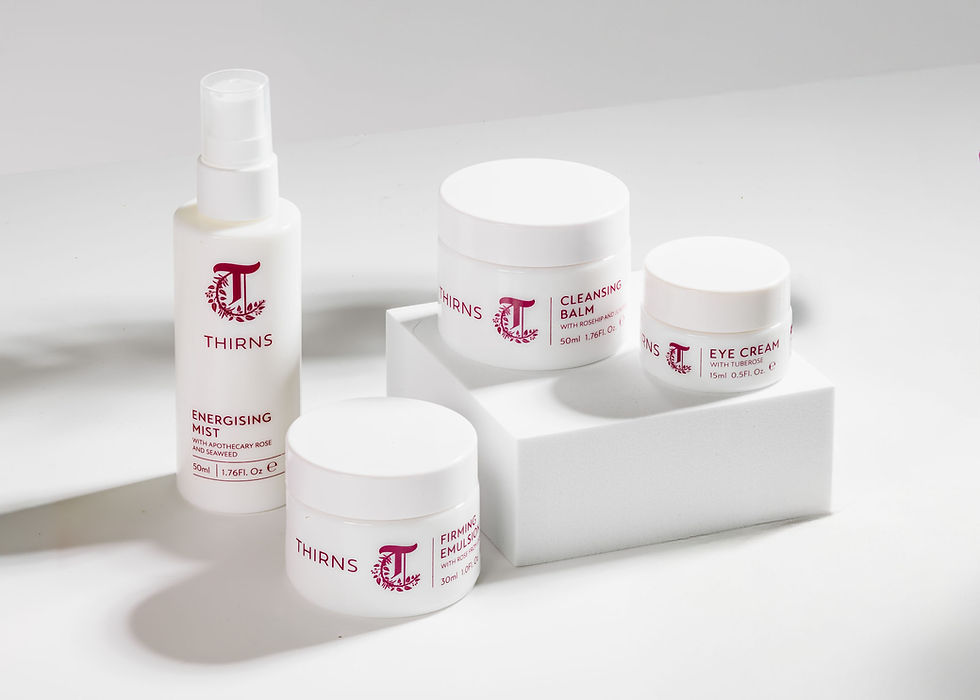
This is the thinking behind the Thirns four-step routine: a streamlined approach designed to work with the skin’s natural barrier function through gentle cleansing, targeted nourishment, and daily protection, without unnecessary complexity or potential irritants.
Each step is formulated to work in harmony with the skin’s natural functions, helping to maintain comfort, hydration, and resilience over time.
Explore the Thirns range for products formulated to support and protect the skin barrier, without unnecessary irritants.
How to support your skin barrier: Frequently asked questions
How long does it take to repair a damaged skin barrier?
Most people begin to see improvement within two to four weeks of simplifying their routine and using the right ingredients consistently. More significantly damaged barriers may take six to eight weeks to fully recover.
Can I use retinol if my skin barrier is compromised?
It is best to pause retinol use while your barrier is actively damaged, as it can increase sensitivity and slow healing. Once your skin has settled, reintroduce it gradually, starting with a low concentration, once or twice a week.
Is the skin barrier the same as the moisture barrier?
The terms are often used interchangeably. The skin barrier refers to the stratum corneum as a whole, while the moisture barrier more specifically refers to the lipid matrix within it. In practice, protecting one means protecting the other.
Can oily or acne-prone skin have a damaged barrier?
Absolutely. Skin type does not protect you from barrier damage. In fact, oily and acne-prone skin is often more susceptible, because people with these skin types tend to over-cleanse or use harsh, stripping products in an attempt to control oil or breakouts.
What is the best moisturiser for a damaged skin barrier?
Look for fragrance-free formulas containing ceramides, hyaluronic acid, and fatty acids. Thicker creams tend to be more occlusive and effective for repair, though gels and lotions can work well for oilier skin types.
Does diet affect the skin barrier?
Yes. Essential fatty acids, particularly omega-3 and omega-6, found in oily fish, flaxseed, and walnuts, are building blocks of the skin's lipid barrier. Staying well hydrated and reducing refined sugar and alcohol can also support skin health from the inside out.
Can stress damage the skin barrier?
Yes. Chronic stress elevates cortisol, which impairs the skin's ability to produce ceramides and other barrier lipids, slows cell turnover, and increases inflammation. Managing stress is as much a skincare step as anything you apply topically.
Is double cleansing bad for the skin barrier?
Not necessarily, if done correctly. Using a gentle oil-based cleanser followed by a mild water-based cleanser is generally fine for most skin types. The key is choosing low-irritant formulas for both steps and not over-cleansing.


Comments